Sheep collagen a wound healing wonder for people
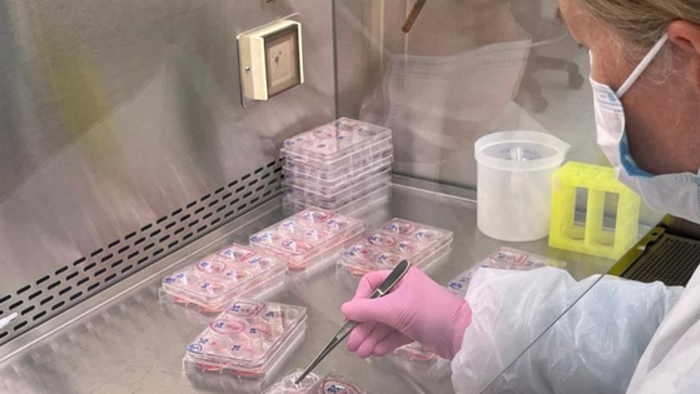
Collagen from sheep skin and lungs can support wound closure and tissue regeneration in people, opening the door for new wound care materials made from traditionally underutilised red meat processing byproducts.
Research funded by the Australian Meat Processor Corporation (AMPC) and conducted by New Zealand’s Bioeconomy Science Institute (BSI) used a human three-dimensional skin model to demonstrate that animal byproducts can be transformed into high-value medical products.
The breakthrough work could have wide-reaching benefits across patient care, industry profitability and environmental sustainability.
AMPC Program Manager for Markets and Integrity Dr Ann McDonald said collagen-based dressings played an important role in wound care but currently faced limitations in healing speed and sustainability.
"The aim was to develop improved bio-based materials by incorporating collagen peptides sourced from underutilised animal by-products, with a focus on Type III collagen, which is important for early-stage wound healing," she said.
"Wound healing is a complex process requiring the coordinated interaction of cells, growth factors and extracellular matrix components.
"In cases of chronic or severe wounds, natural healing is impaired, driving the need for advanced wound care materials. Collagen-based dressings are widely used to promote healing, however current products primarily rely on Type I collagen, which provides structural support but lacks the regenerative functions of Type III collagen that are critical during early healing."
The researchers found sheep lung tissue provided a higher proportion of Type III collagen than skin from sheep.
In the study, enzymatic hydrolysis of lung collagen generated bioactive peptides, which were combined with skin-derived collagen to produce fibrous mats.
These mats showed good stability in simulated wound fluid, confirming their potential as effective bioactive dressings.
Further, economic feasibility studies showed that routine clinical dressings represent the most achievable initial market entry, offering favourable return on investment and moderate regulatory requirements.
Dr McDonald said trauma care and consumer plasters presented longer-term opportunities as production scales and technology matures.
"High-cost biologics used in chronic wounds represent a niche but potentially high-value market, where differentiated collagen-based products could provide clinical and economic advantages," she said.
Clinicians treating chronic and trauma wounds and biotechnology companies seeking sustainable products could be a target market.
Economic analysis showed that pilot-scale production was feasible, and indicates a potential strong return-on-investment for clinical dressing markets under outsourced freeze-drying scenarios. Freeze-drying during processing to extract the collagen was identified as the main cost driver.
Bioeconomy Science Institute senior scientist Dr Santanu Deb Choudhury said the research demonstrated how low-value meat coproducts could be transformed into advanced biomaterials, delivering both sustainability and economic benefits.
“By extracting collagen from animal byproducts that are often underused, we can create high-value materials with real applications in human health,” Dr Deb Choudhury said.
“This work shows how bioeconomy science can unlock value across the supply chain – reducing waste, improving sustainability outcomes, and opening new opportunities in advanced medical materials.”
IMAGE CAPTION: Scientists plate up collagen extracted from sheep byproducts to test the ability for wound healing in people.
For more information
Contact AMPC Communications Specialist Shan Goodwin on 0419 547 760 or email s.goodwin@ampc.com.au