Industry insights
AMPC's series of industry insights will provide topical analysis of economic and production issues affecting the red meat processing industry.
August Market Report and Climate Outlook
Slaughter
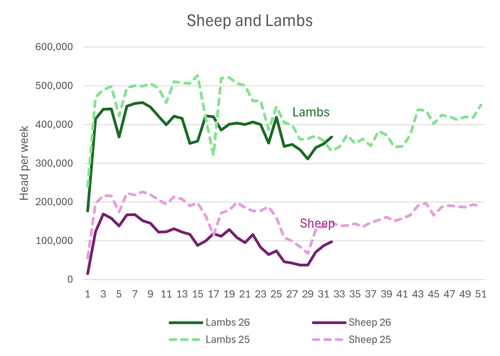
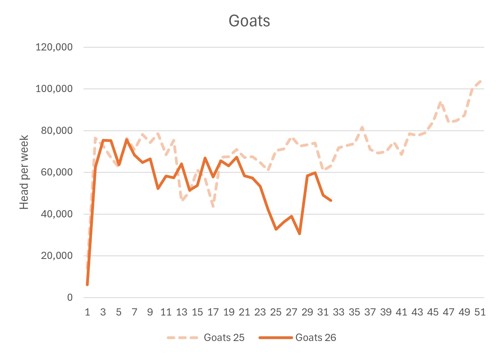
Australian cattle slaughter has remained broadly steady through recent weeks, despite a modest late-July decline, while smallstock throughput has shown signs of recovering from recent lows.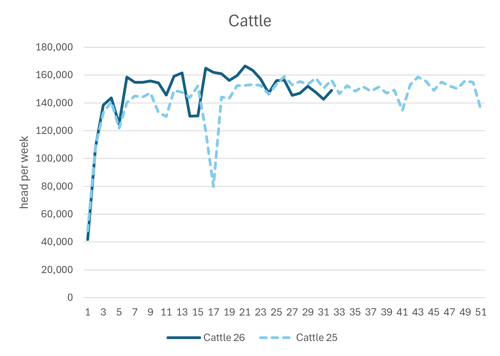
 Livestock prices
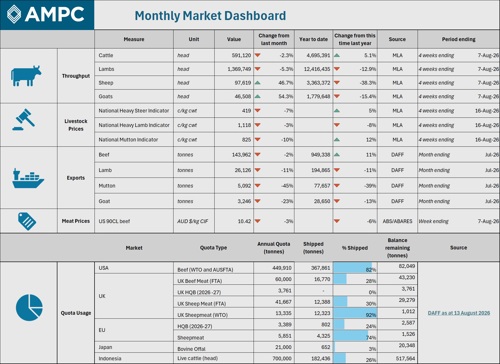
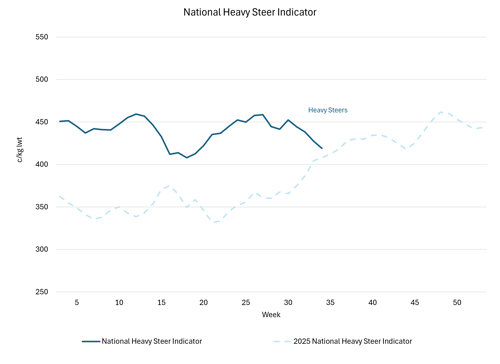
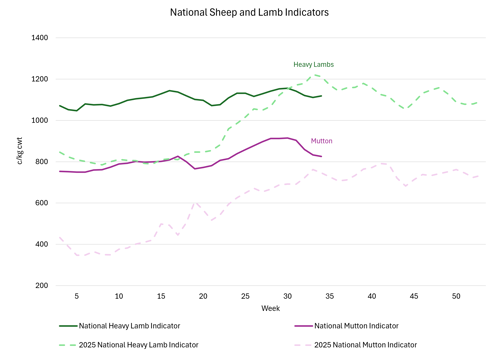
Australian livestock prices have eased across cattle, sheep and goats. Cattle values have softened as drier conditions lift turnoff and export beef prices weaken, while lamb prices remain high but mixed as processor demand fluctuates around winter maintenance shutdowns. Mutton has come under stronger downward pressure, with prices easing across several saleyards, and goat prices are also facing pressure as drying pastoral conditions bring more supply forward.
Exports
Australian red meat exports remain historically strong, setting a new record for the 2025/26 financial year ($27 billion, ABARES). However export conditions continue to soften as winter production tightens and market access constraints intensify. Beef exports eased in July and have been sharply redirected away from China and South Kore following the triggering of safeguard tariffs. Lamb and mutton exports continue to benefit from solid demand, but tighter sheepmeat supply and flock rebuilding are limiting export availability.
Long Term Weather Forecast
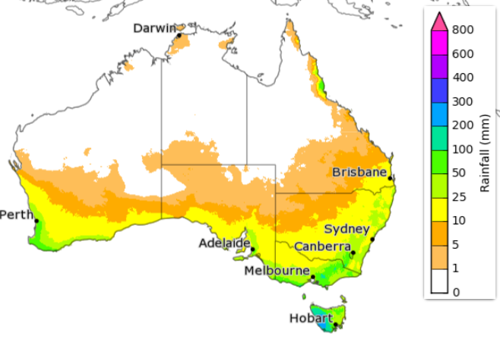
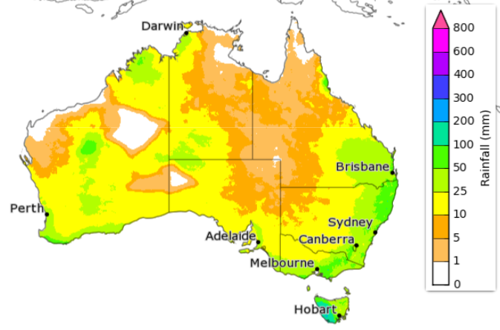
The BOM outlook for August to October points to below-average rainfall across much of eastern and southern Australia, with an increased risk of unusually low rainfall in parts of the south-east and south-west. This raises the risk of tightening pasture growth, higher supplementary feeding needs and earlier turnoff decisions in drier regions. Above-average rainfall is more likely across north-west Australia and parts of the interior, although much of northern Australia remains in its dry-season period. Warmer-than-average temperatures across most areas south of the tropics may further lift pasture and water demand heading into spring.
September Rainfall Forecast
October Rainfall Forecast
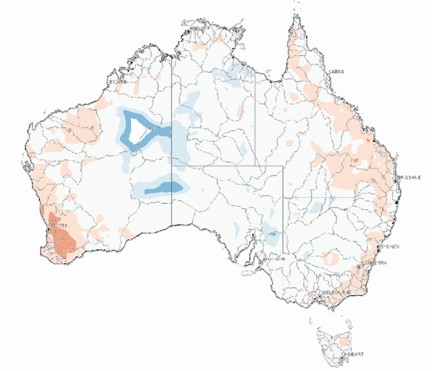
Root Zone Soil Moisture
Hotter and dryer conditions will reduce deliver below average root zone soil moisture over much of the eastern and western Australia. September forecast is shown below.
Modelling on impact of fuel and plastics price increases.
Conflict in the Middle East is impacting red meat processing businesses through both increased costs and disruption of supply chains. AMPC has conducted modelling and analysis on the impact of fuel and plastic price increases.
Red Meat Processing Industry Data Library
AMPC has compiled a detailed list of publicly available data relevant to the red meat processing industry. The Data Library is a valuable resource providing a catalogued description and weblinks to industry and government data in the following key areas:
• Livestock Markets
• Product Markets and Trade
• Industry Economics
• Labour
• Weather and Climate
Snapshots of impacts from AMPC-funded research
An independent review has examined the expected impacts of 60 AMPC-funded research projects completed between 2020 and 2025, drawing together six years of ex-post impact assessments across AMPC’s RD&E portfolio.
The analysis covered around $20.8 million in AMPC investment and found that projects delivered consistent positive returns over time. The overall average return was $6.20 in benefits for every $1 invested. In most cases, benefits were realised within five to 10 years of project completion.
In addition to economic outcomes, the review found that many projects also delivered environmental and social benefits, including improvements in energy efficiency, waste reduction, workforce capability and community trust. All projects assessed aligned with at least one Australian Government innovation priority, particularly in digital agriculture, climate resilience and maintaining Australia’s position as a trusted exporter of premium food.
AMPC continues to monitor, evaluate and report the expected return from its investment portfolio.
Past editions
April 2024
This edition provides a consolidated summary of longer-term economic and industry forecasts, as well as analysis of processor input costs. The focus of our insights will change to reflect recently released data and current issues impacting our industry.
Key takeaways
- Recovering Australian and international economy
- Slaughter throughput will continue to increase in 2024 subject to labour availability
- Declined US beef production to reduce exports and increase imports, both creating opportunities for Australian product
- Rise in processor input costs exceeding CPI